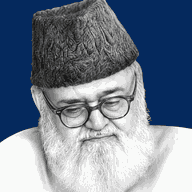
A Scholar Is Born
Syed Abul A'la Maududi was born on 25 September 1903 in Aurangabad, Hyderabad Deccan, into a family known for learning, spirituality and religious commitment.
Welcome to
Read Maududi
Quick access with your Google account
Biography

1903 – 1979
Founder of Jamaat-e-Islami — Scholar, Journalist, Revivalist
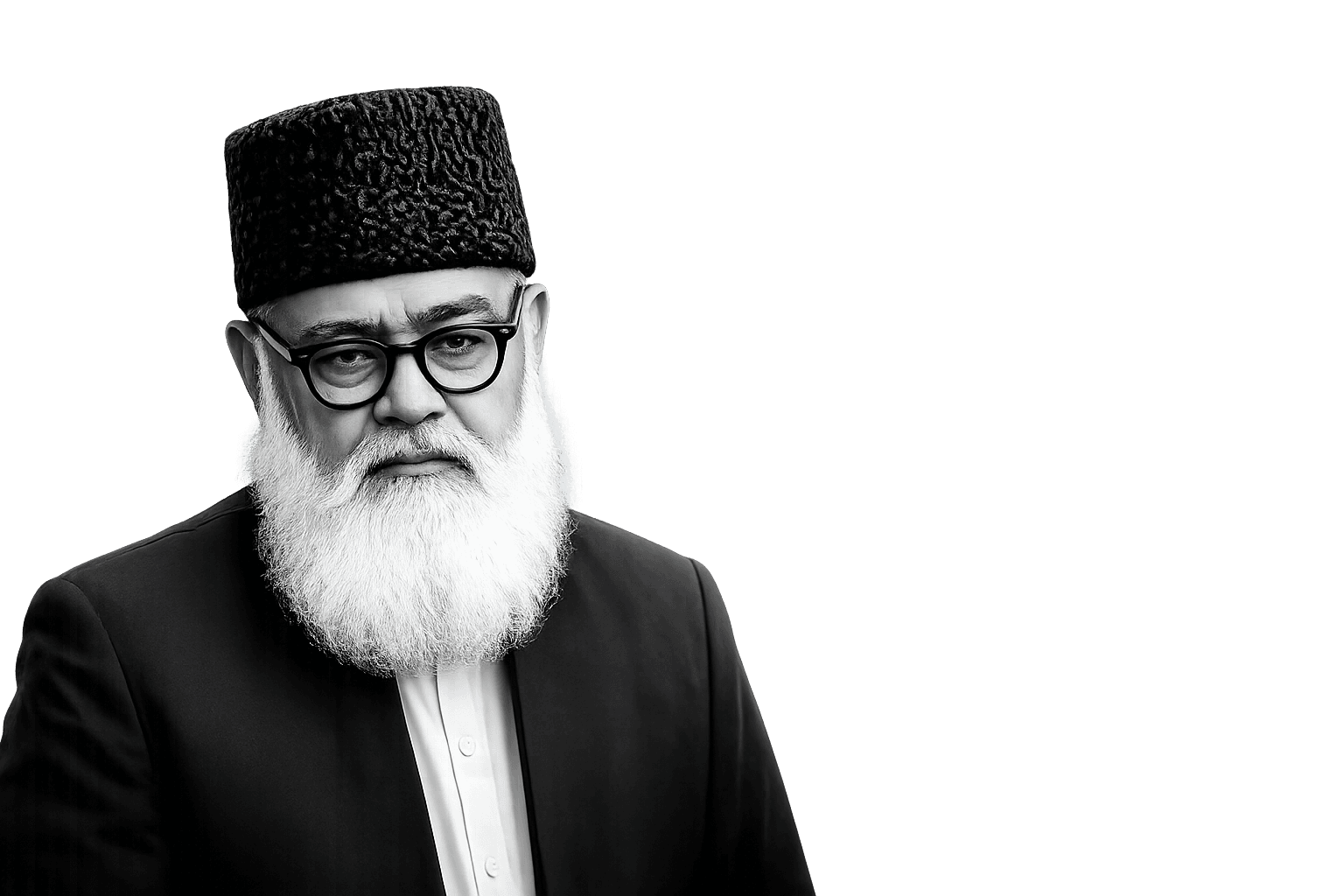
Quote of the Day
“The purpose of organizing faith into a dynamic movement is to ensure that personal piety does not remain a passive, isolated endeavor in our lives.”
Syed Abul A'la Maududi (also spelled Mawdudi; 25 September 1903 – 22 September 1979) stands among the most influential Islamic thinkers of the twentieth century. He was not merely a scholar, journalist, or political figure; he was a revivalist who rearticulated Islam as a complete system of life at a time when the Muslim world was intellectually fragmented and politically disoriented.
Born in Aurangabad, Hyderabad Deccan, and active as a journalist before becoming one of the most influential Muslim intellectuals of his century, Maududi built a body of thought that treated Islam as a complete framework for belief, morality, politics, and social order. He founded Jamaat-e-Islami in 1941 and completed the six-volume Tafhim-ul-Quran in 1972.
Read Maududi publishes this biography alongside the digital library of his works — books, Tafheem-ul-Quran, audio narrations, and lectures — so readers can go from his life to his writings in one place.
Life and Journey
Syed Abul A'la Maududi was born on 25 September 1903 in Aurangabad, Hyderabad Deccan, into a family known for learning, spirituality and religious commitment.
He launched Tarjuman-ul-Quran, which became the principal platform for his Qur'anic thought, critique of Western ideologies and call for Islamic renewal.
On 26 August 1941, Maulana Maududi founded Jamaat-e-Islami in Lahore with 75 members and was elected its first Ameer.
Following Partition, Maulana Maududi migrated to Pakistan. In early 1948, he delivered five Radio Pakistan lectures explaining Islam's moral, social, economic, political and spiritual system.
Maulana Maududi was imprisoned for the first time on 4 October 1948 for his campaign for an Islamic constitution. On 12 March 1949, the Constituent Assembly adopted the Objectives Resolution, and he was released soon after.
Following the publication of The Qadiani Problem during the Finality of Prophethood agitation, a military court sentenced him to death. He refused to seek mercy. The sentence was later commuted and ultimately withdrawn.
Maulana Maududi travelled through regions and historical sites mentioned in the Qur'an. The journey deepened the geographical and historical research reflected in his Tafseer and other literature.
The Ayub regime declared Jamaat-e-Islami unlawful, sealed its offices and imprisoned Maulana Maududi and the members of its Majlis-e-Shura. The Supreme Court later restored Jamaat's legal status.
The historic Yaum-e-Shaukat-e-Islam demonstrated Jamaat's growing public strength. In Pakistan's first general election, Jamaat received nearly two million votes across the undivided country and emerged as the third-largest national force by popular vote.
Maulana Maududi completed the six-volume Tafhim-ul-Quran, one of the most influential Qur'anic commentaries of the modern era. The same year, because of declining health, he stepped down as Ameer after leading Jamaat for 31 years.
He authored the two-volume Seerat-e-Sarwar-e-Alam, presenting the life and mission of Prophet Muhammad ﷺ within its historical, civilisational and revolutionary context. The volumes were published, but the work remained incomplete due to his ailing health.
Maulana Maududi became the first recipient of the King Faisal International Prize for Service to Islam. Because of his illness, the award was received on his behalf by his son and Maulana Khalil Ahmad Hamidi, Jamaat's Head of Foreign Affairs.
He passed away in Buffalo, New York, on 22 September 1979. Funeral prayers were offered across several continents, while hundreds of thousands attended his funeral in Lahore. He was laid to rest at 5-A Zaildar Park, leaving behind a worldwide intellectual and organisational legacy.
Syed Maududi's ideas ring truer today than ever because he presented Islam as a complete, practical worldview addressing modern challenges. In works like Tafhim-ul-Quran, Towards Understanding Islam, Islam and the Secular Mind and A Short History of the Revivalist Movement, he goes beyond plain exegesis of scripture.
Maududi applies Qur'anic guidance to contemporary issues — explaining economics, society, governance and history from an Islamic perspective. His analysis shows how Islamic principles can underpin democratic governance, social justice and moral order. He anticipated the decline of secular ideologies and critiqued materialist worldviews.
For a generation confronting political confusion, economic inequality and cultural crisis, Maududi provides a blueprint: faith is not merely private ritual but a framework for life. His vision offers clarity and inspiration, proving that Islam remains a vibrant alternative for building a just society.
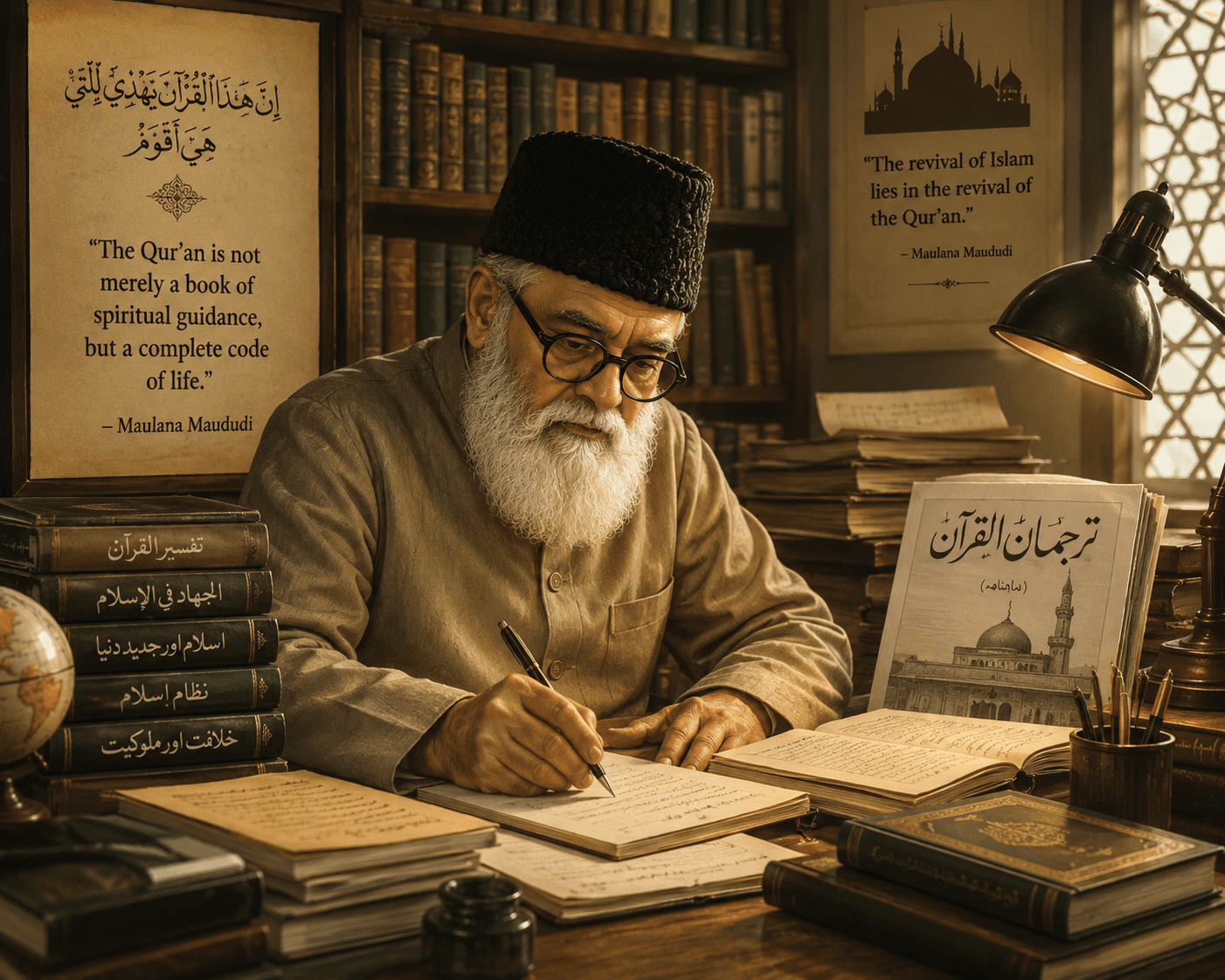
A time will, then, come when communism will live in fear of its very survival in Moscow itself, when capitalist democracy will shudder at the thought of defending itself even in Washington and New York, when materialist secularism will be unable to find a place even in the universities of London and Paris, when racialism and nationalism will not win even one devotee even among the Brahmans and Germans.
Syed Maududi's influence extends far beyond Pakistan's borders. His books, especially the six-volume Tafhim-ul-Quran, have been translated into many languages and read worldwide. Leading Islamic thinkers in the Arab world took notice: Egypt's Hasan al-Banna and Sayyid Qutb studied his writings. In Iran, Ayatollah Khomeini met Maududi and helped bring his works into Persian circulation.
By the mid-1960s, Maududi's complete corpus was available in Turkey and influenced local scholars. Study circles at universities and madrasas — from Cairo to Madinah — have discussed his ideas. Several Western seekers also found guidance in his thought, such as the American-born Maryam Jameelah and the Jamaican-Canadian Dr. Bilal Philips.
Even today, Islamic movements around the world echo Maududi's terminology and goals. Jamaat's international links and contemporary Islamic forums still reflect the ideological bonds he helped forge, showing that his Islamic vision truly knows no borders.

Tributes from leading scholars and thinkers of the Muslim world.
“A very good journal by the name of Tarjuman-ul-Quran is being published from Hyderabad. Mr. Maududi is its editor. I have read his articles. Along with religion, he also keeps a close eye on contemporary issues. I really liked his book Al-Jihad fil-Islam. Why don't you invite him to come to Dar-ul-Islam? I believe he will accept the invitation. The greatest merit of Al-Jihad fil-Islam is that Maulana Abul A'la Maududi has not adopted an apologetic tone in it; rather, he has presented Islam's perspectives on war and jihad without any convoluted interpretations or distortions. I advise every intelligent and knowledgeable person to study it.”
“The scholarly world has become fully acquainted with Maulana Maududi, and it is a fact that he is the foremost Islamic thinker and a high-ranking religious scholar of this era. The flood of atheism and irreligion that came to India from Europe — providence arranged to build a dam against it through such pure and noble hands; someone who is highly aware of and well-versed in the ancient and modern thoughts of Europe. Furthermore, he possesses such deep and clear knowledge of the Quran and Sunnah that he can discuss all contemporary issues satisfactorily in its light. It can be clearly stated that the Muslims of India and the Islamic world have many religious expectations attached to Mr. Maududi.”
“In May 1953, I was on my way to a gathering in Rae Bareli, and someone shared a news report: "A military court in Pakistan has sentenced Maulana Maududi to death." This incident struck my heart so hard that I could not stay in that gathering. It was not merely an incident affecting the subcontinent, but a tragedy for the entire Islamic world. I testify with an open heart that, perhaps after Allama Iqbal, no one has influenced the modern mind as deeply as Maulana Maududi has. The Maulana instilled confidence in the minds of the younger generation regarding the rationality of Islam, and established the conviction that Islam can solve the problems of the present era.”
“He possesses such a personality that we have rarely seen such accomplished individuals: immensely firm in supporting the truth, miles away from defensiveness and apologetics, an absolute embodiment of patience and steadfastness during trials in the path of truth, and averse to seeking the favor of contemporary rulers. Among the scholars of Pakistan and India, he possesses the deepest understanding of the religion (Tafaqquh fid-Deen) and holds the greatest insight into the historical and legislative realities of Islam. He is an ocean of knowledge, an expert in applying Islamic principles to contemporary issues, and the pioneer of a distinctly modern method of reasoning in this regard.”
“I was deeply grieved to hear the heartbreaking news of the passing of Maulana Syed Abul A'la Maududi. May Allah Almighty accept his lofty services for His religion and grant him a place in Jannat-ul-Firdaws.”


